
Introduction to Incoterms in E-Invoicing
电子发票中的国际贸易术语介绍

English article
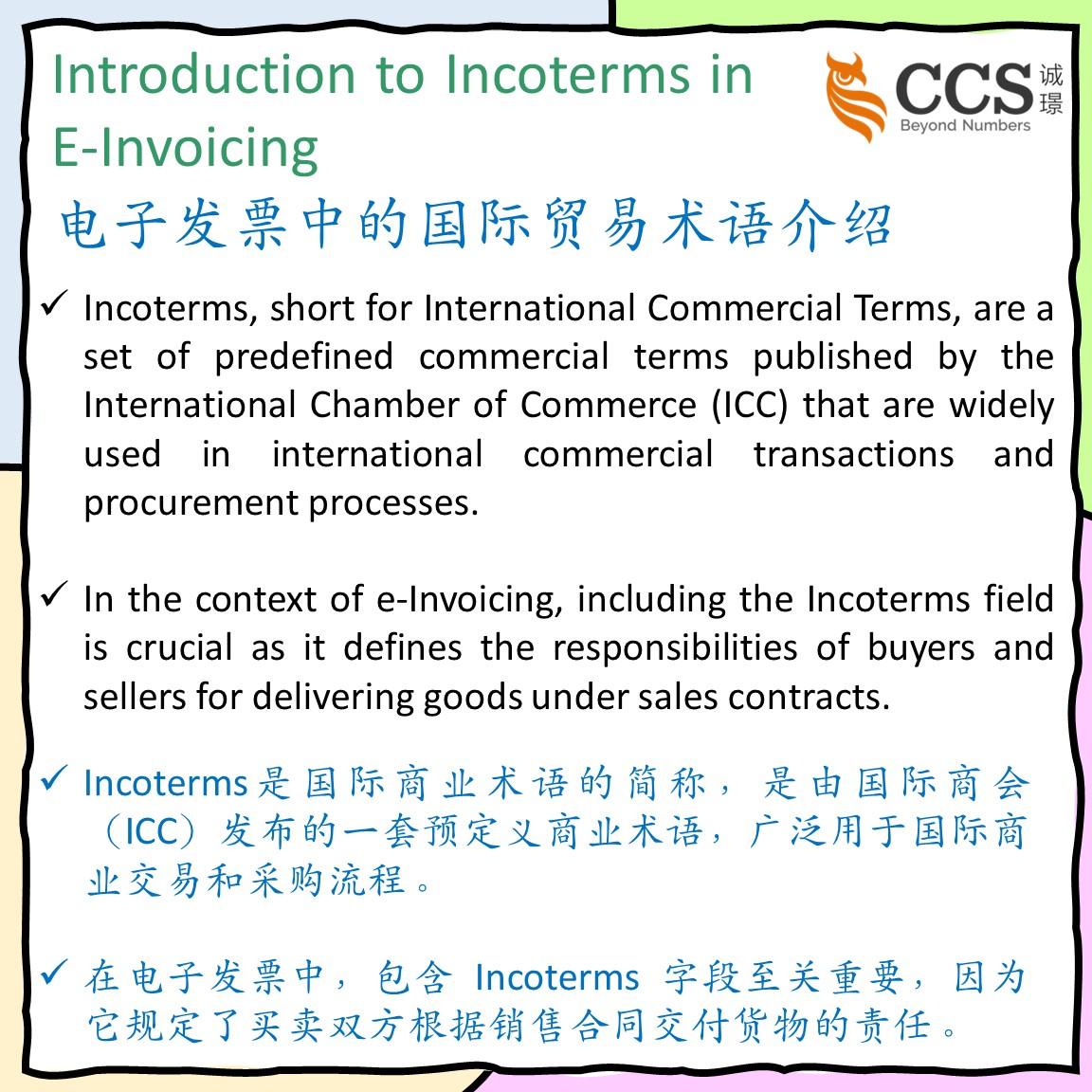
For businesses involved in import and export activities, it is crucial to take note of the Incoterms field, as it is one of the mandatory fields in e-Invoicing. Incoterms, short for International Commercial Terms, are a set of predefined commercial terms published by the International Chamber of Commerce (ICC) that are widely used in international commercial transactions and procurement processes.
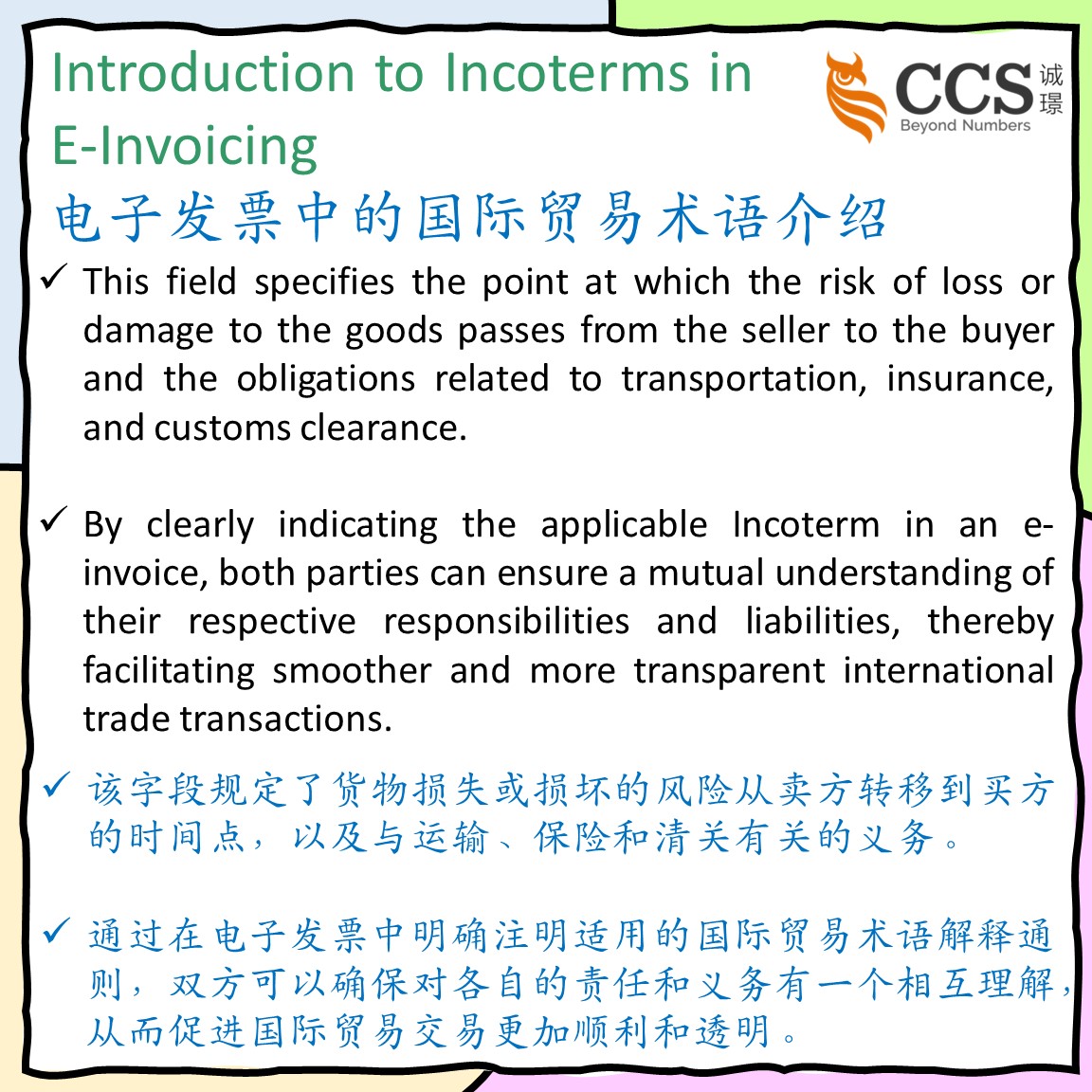
This field defines the responsibilities of buyers and sellers for the delivery of goods under sales contracts, specifying the point at which the risk of loss or damage to the goods passes from the seller to the buyer, as well as the obligations related to transportation, insurance, and customs clearance.
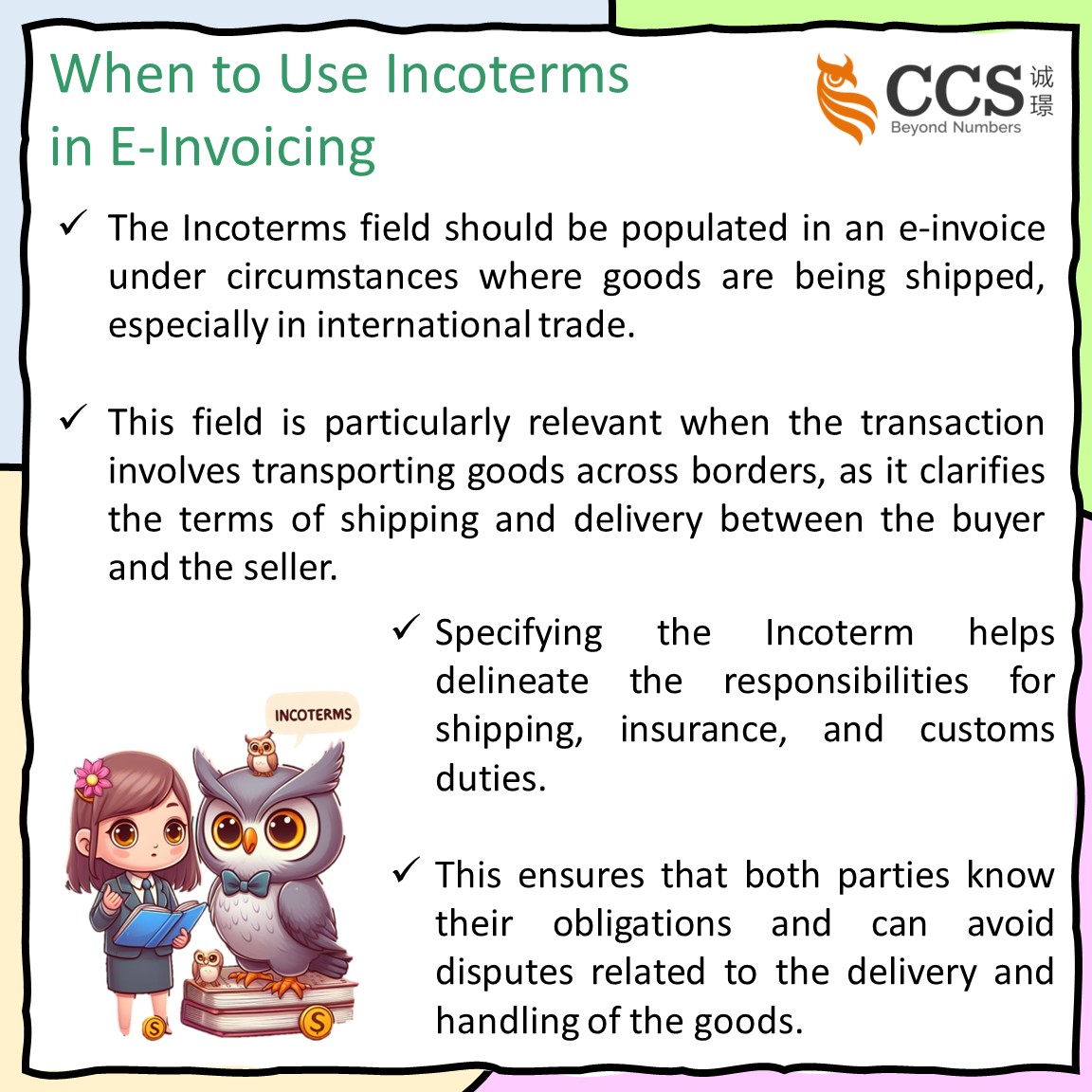
By clearly indicating the applicable Incoterm in an e-invoice, both parties can ensure a mutual understanding of their respective responsibilities and liabilities, thereby facilitating smoother and more transparent international trade transactions.
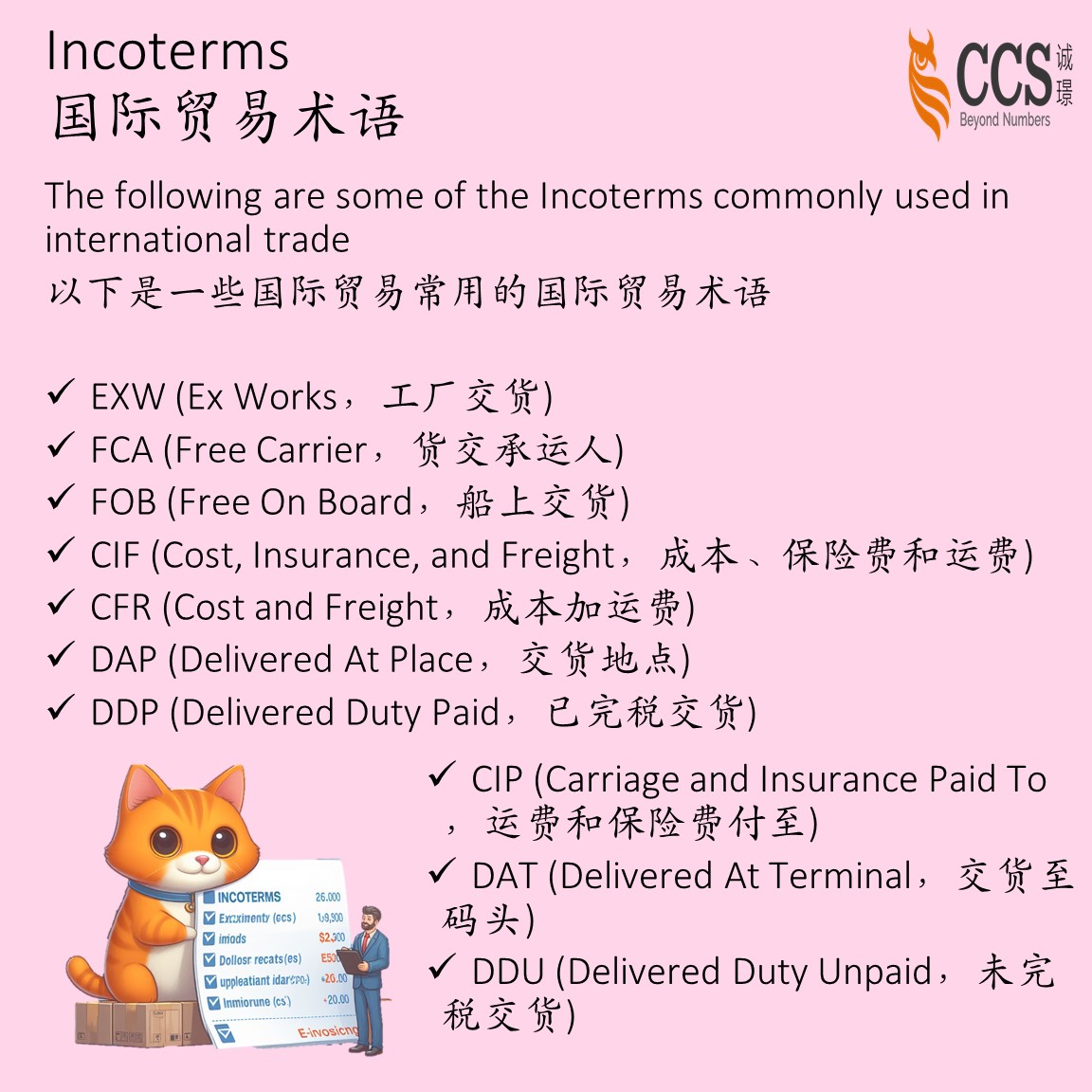
1. EXW (Ex Works)
Definition: The seller delivers the goods to the buyer at his location (e.g. factory, warehouse, etc.). The seller's responsibility is limited to preparing the goods at its location and the buyer is responsible for all subsequent costs and risks.
Example: A manufacturer located in Shanghai delivers goods to the buyer at its factory in Shanghai. The buyer needs to arrange transport and insurance to get the goods from the Shanghai factory to its warehouse in New York.
2. FCA (Free Carrier)
Definition: The seller delivers the goods to a carrier designated by the buyer, usually at the seller's location or another location designated by the seller. The seller is responsible for loading and export customs clearance.
Example: A German company delivers goods at its warehouse in Hamburg to a logistics company nominated by the buyer. The seller is responsible for loading the goods onto trucks and for export formalities.
3. FOB (Free On Board)
Definition: The seller is responsible for delivering the goods to the named port of shipment and loading them onto the ship. Risk passes from the seller to the buyer when the goods cross the ship's rail.
Example: An Indian exporter delivers goods to the port of Mumbai and loads them onto a ship bound for London. The seller is responsible for the cost of the goods until they are loaded onto the ship, and the buyer bears the cost and risk from the ship.
4. CIF (Cost, Insurance, and Freight)
Definition: The seller is responsible for the freight and insurance costs to deliver the goods to the named port of destination. The risk is transferred to the buyer when the goods are loaded onto the ship.
Example: A Brazilian exporter ships coffee beans to the Port of Los Angeles and pays freight and insurance. The buyer receives the goods from the Port of Los Angeles and is responsible for the subsequent costs and risks.
5. CFR (Cost and Freight)
Definition: The seller pays freight to deliver the goods to the named port of destination, but the risk passes to the buyer when the goods are loaded on board the ship.
Example: A Japanese company ships electronic products to the port of Sydney, paying freight, but not insurance. The buyer receives the goods from the port of Sydney and assumes the risk and subsequent costs.
6. DAP (Delivered At Place)
Definition: The seller delivers the goods, duty unpaid, to the place specified by the buyer. The seller assumes all costs and risks until the goods reach their destination.
Example: A French supplier delivers wine to a buyer's warehouse in the U.S. The seller is responsible for the transport and all related costs, and the buyer is responsible for import duties and other costs.
7. DDP (Delivered Duty Paid)
Definition: The seller is responsible for delivering the goods to the buyer's designated location and paying all import duties and taxes. The seller bears all costs and risks until the goods reach their destination.
Example: An Italian company delivers furniture to the buyer's warehouse in China and the seller is responsible for paying all freight, insurance, duties and taxes.
8. CIP (Carriage and Insurance Paid To)
Definition: The seller pays the freight and insurance to deliver the goods to the named destination. The risk is transferred to the buyer when the goods are handed over to the carrier.
Example: A Korean company ships electronic equipment to Vancouver, Canada and pays freight and insurance. The buyer assumes the risk when the goods are handed over to the carrier.
9. DAT (Delivered At Terminal)
Definition: The seller is responsible for delivering the goods to the named port of destination or to the terminal at the place of destination and bears all costs and risks until the goods are delivered at the terminal.
Example: A Thai exporter delivers rice to the terminal in the port of Rotterdam, the Netherlands. The seller is responsible for all costs and risks and the buyer takes delivery of the goods from the terminal.
10. DDU (Delivered Duty Unpaid)
Definition: The seller is responsible for delivering the goods to the buyer's designated place, but is not responsible for paying import duties and taxes. The buyer bears these costs.
Example: A Mexican company delivers textiles to the buyer's warehouse in the U.S. The seller is responsible for the transport and all related costs, but the buyer pays import duties and taxes.
中文内容
对于从事进出口活动的企业来说,必须注意《国际贸易术语解释通则》字段,因为它是电子发票中的必填字段之一。国际贸易术语解释通则是国际商业条款的简称,是由国际商会(ICC)发布的一套预定义商业条款,广泛应用于国际商业交易和采购流程。
该术语定义了买卖双方在销售合同下交付货物的责任,规定了货物损失或损坏风险从卖方转移到买方的时间点,以及与运输、保险和清关有关的义务。
通过在电子发票中明确指出适用的国际贸易术语解释通则,双方可确保对各自的责任和义务达成共识,从而促进国际贸易交易更加顺畅和透明。
Introduction to Incoterms in E-Invoicing
1. EXW (Ex Works,工厂交货)
定义:卖方在其所在地(如工厂、仓库等)交货给买方。卖方的责任仅限于在其地点准备好货物,买方负责所有后续的费用和风险。
例子:一家位于上海的制造商将货物在其上海工厂交给买方。买方需要安排运输和保险,将货物从上海工厂运到其在纽约的仓库。
2. FCA (Free Carrier,货交承运人)
定义:卖方将货物交给买方指定的承运人,通常是在卖方的所在地或指定的其他地点。卖方负责装载和出口报关。
例子:一家德国公司在其汉堡仓库将货物交给买方指定的物流公司。卖方负责将货物装上卡车并办理出口手续。
3. FOB (Free On Board,船上交货)
定义:卖方负责将货物运送到指定的装运港,并装上船。风险在货物越过船舷时从卖方转移到买方。
例子:一家印度出口商将货物送到孟买港并装上前往伦敦的船。卖方负责将货物装船前的费用,买方承担从船上开始的费用和风险。
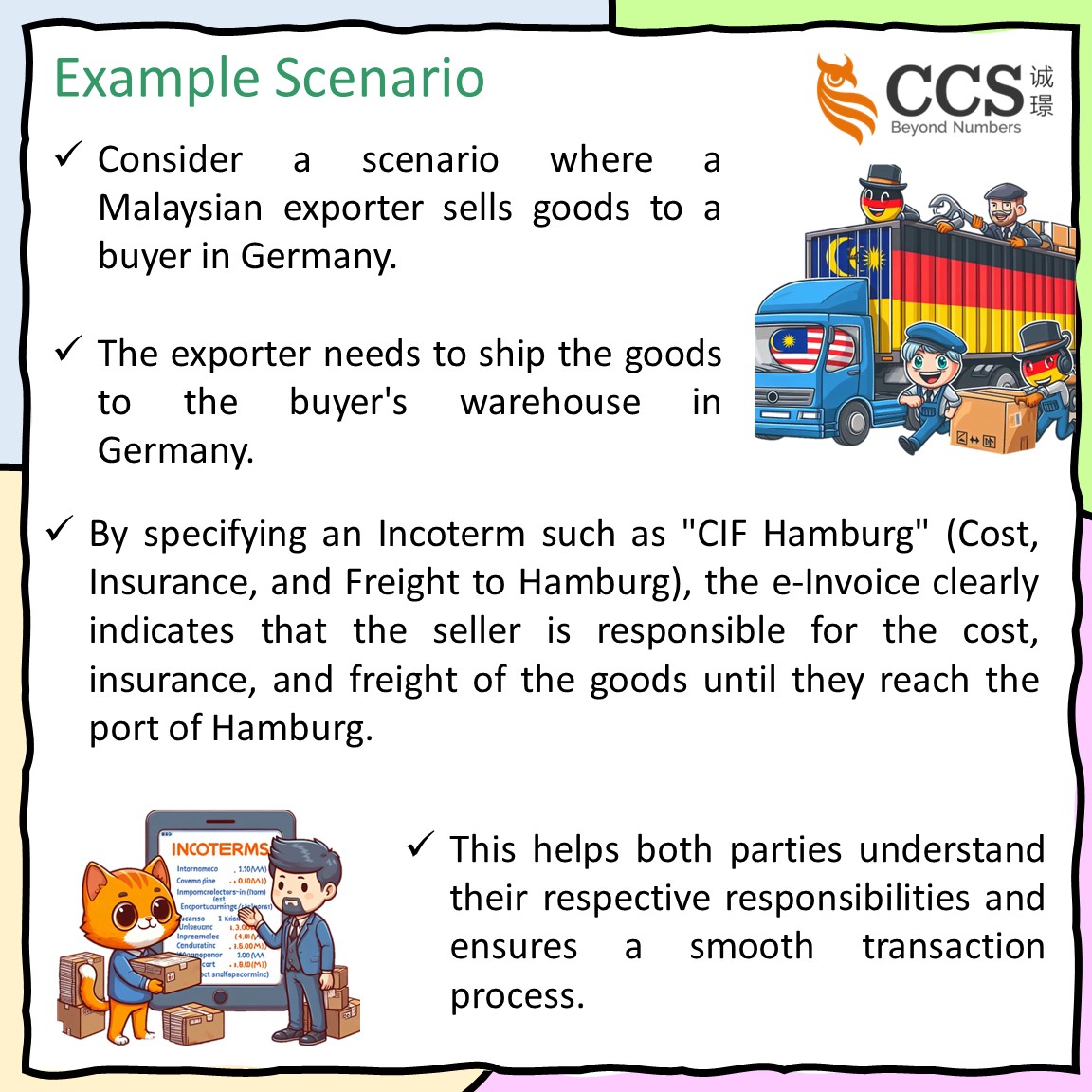
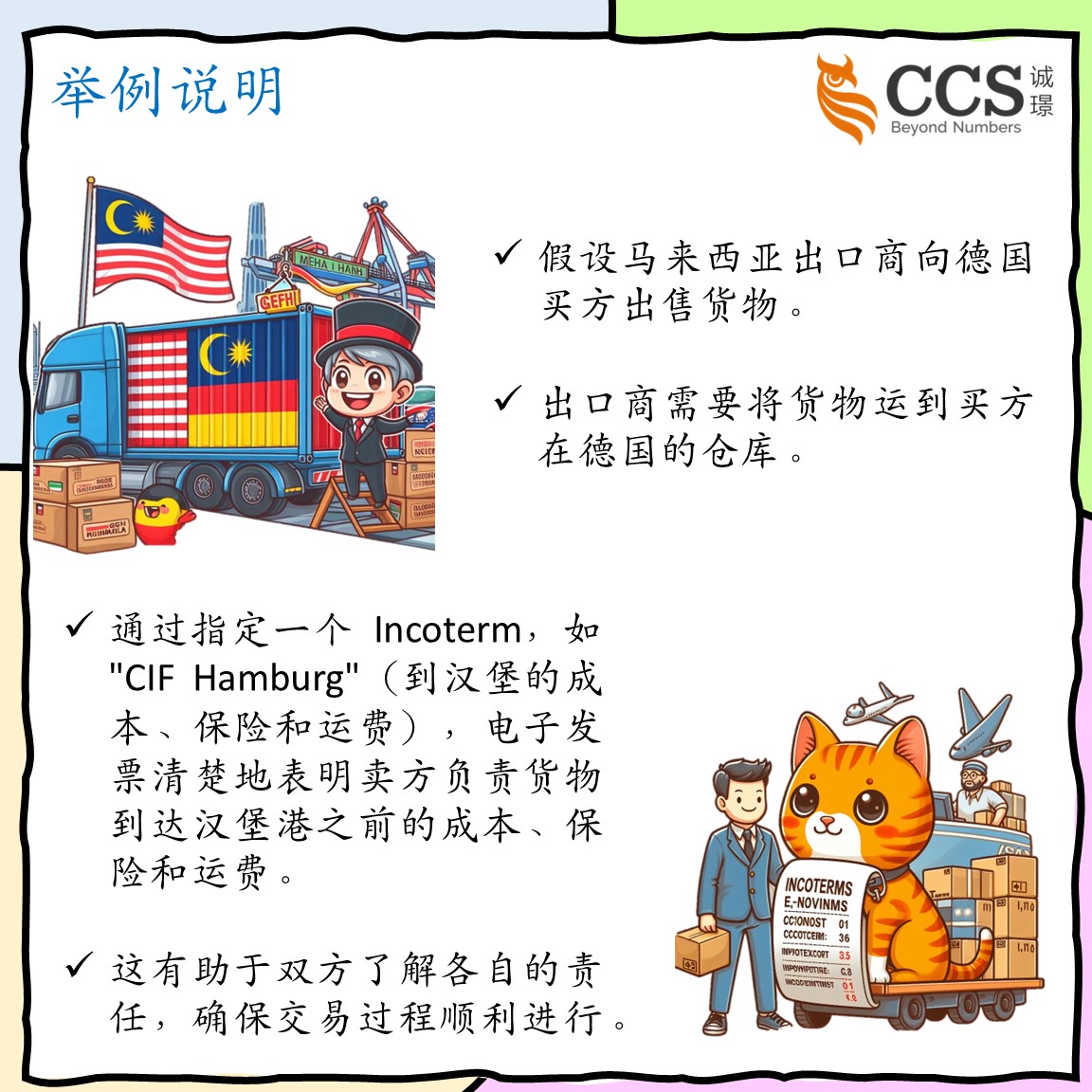
4. CIF (Cost, Insurance, and Freight,成本、保险费和运费)
定义:卖方负责运费和保险费,将货物运送到指定目的港。风险在货物装船时转移给买方。
例子:一家巴西出口商将咖啡豆运到洛杉矶港,并支付运费和保险费。买方从洛杉矶港接货并负责后续费用和风险。
5. CFR (Cost and Freight,成本加运费)
定义:卖方支付运费将货物运送到指定目的港,但风险在货物装船时转移给买方。
例子:一家日本公司将电子产品运到悉尼港,支付运费,但不包括保险费。买方从悉尼港接货并承担风险和后续费用。
6. DAP (Delivered At Place,交货地点)
定义:卖方将货物运送到买方指定的地点,未完税。卖方承担所有费用和风险直至货物到达目的地。
例子:一家法国供应商将葡萄酒送到美国买方的仓库,卖方负责运输和所有相关费用,买方负责进口关税和其他费用。
7. DDP (Delivered Duty Paid,已完税交货)
定义:卖方负责将货物运送到买方指定地点并支付所有进口关税和税费。卖方承担所有费用和风险直至货物到达目的地。
例子:一家意大利公司将家具运送到中国买方的仓库,卖方负责支付所有运费、保险费、关税和税费。
8. CIP (Carriage and Insurance Paid To,运费和保险费付至)
定义:卖方支付运费和保险费,将货物运送到指定目的地。风险在货物交给承运人时转移给买方。
例子:一家韩国企业将电子设备运送到加拿大温哥华,并支付运费和保险费。买方在货物交给承运人时承担风险。
9. DAT (Delivered At Terminal,交货至码头)
定义:卖方负责将货物运送到指定的目的港或目的地的码头,并承担所有费用和风险直至货物在码头交货。
例子:一家泰国出口商将大米运送到荷兰鹿特丹港的码头。卖方负责所有费用和风险,买方从码头接货。
10. DDU (Delivered Duty Unpaid,未完税交货)
定义:卖方负责将货物运送到买方指定地点,但不负责支付进口关税和税费。买方承担这些费用。
例子:一家墨西哥公司将纺织品运送到美国买方的仓库,卖方负责运输和所有相关费用,但买方需支付进口关税和税费。
MyTax Info
More practical e-Invoice updates